Oplus_16908288
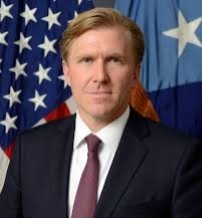
New Delhi, India March 24: The United States views India as an indispensable partner in ensuring a favourable balance of power in the Indo-Pacific, senior US official Elbridge Colby, Under Secretary of War for Policy, said on Sunday. Speaking at an event in New Delhi, Colby underlined that both nations benefit from an Indo-Pacific region where no single power can dominate.
Colby said Washington’s cooperation with New Delhi is aimed not only at collaboration on key issues but at strengthening India’s strategic capacity to maintain a stable regional balance of power. “Our efforts are designed precisely to promote and sustain a favourable regional balance that serves both our nations,” he said.
He emphasised that the US holds India in high regard — as a republic of continental scale, a nation with a proud strategic tradition, and a country whose decisions will significantly shape the future of the Indo-Pacific.
Despite differences in history, geography and perspective, Colby said both nations share a fundamental belief that Asia’s future must be determined by sovereign nations free to chart their own course. He outlined a “logical, coherent framework” that, according to him, aligns closely with India’s geopolitical and defence outlook.
Indo-Pacific at the Centre of Global Power ShiftHighlighting a major global realignment, Colby said the Indo-Pacific has become the central arena of global politics, economics, and security. “Indian and American long-term prosperity will be decisively shaped by developments in this region,” he said, adding that no single country can uphold a stable balance of power in Asia.“Stability will depend on collective contributions from capable states that share an interest in a free and open Indo-Pacific,” he noted.
India’s importance, he said, stems from its size, economic potential, strategic geography across the Indian Ocean, and its self-reliant military forces capable of bearing significant security responsibilities.“For all these reasons, the United States sees India not merely as a key partner, but an essential one,” he added.
Alignment With India’s Strategic OutlookReferring to External Affairs Minister S. Jaishankar’s strategic vision, Colby said the Indian approach resonates strongly with Washington. Both sides, he said, believe in foreign policies grounded in national interests and in building a durable balance of power in Asia.
He stressed that differences between the two nations are natural and do not hinder deeper cooperation. “We are flexible, looking for areas of agreement where they matter most,” Colby said, adding that the partnership rests on strategic self-interest rather than “dusty formalities.”Defence Ties and Industrial CooperationColby detailed the expanding defence cooperation between the two countries, noting deeper military coordination, advanced joint exercises, growing information-sharing and accelerating technology collaboration.
He highlighted the framework for the US-India Major Defence Partnership signed by Secretary Hegseth and Defence Minister Rajnath Singh last October, calling it a strong foundation for future progress.
He said he and Defence Secretary Rajesh Kumar Singh will co-chair the Defence Policy Group meeting on Monday to chart the next phase of the partnership.“Our focus now is on strengthening capabilities that matter in the Indo-Pacific—long-range precision fires, resilient logistics, maritime domain awareness, anti-submarine warfare, and advanced technologies,” Colby stated.
He said the US recognises India’s ambition to expand its indigenous defence industry, calling it “reasonable and essential” for sovereignty and resilience. The potential for co-production and co-development between the two countries, he added, is “great.”A Strategic Partnership Built on CandourColby acknowledged that India and the US have not always been aligned historically, but argued that strategic candour and mutual respect now underpin the relationship. Disagreements, he said, need not hinder cooperation.He praised India as a “waxing power” and said Washington believes New Delhi will play a central role in ensuring a favourable balance of power in the Indo-Pacific. A strong and confident India, he noted, benefits both nations.
Safeguarding Peace Amid Global TransitionsCalling the present geopolitical transition one of the most consequential in generations, Colby warned that such periods often bring instability. The task, he said, is to preserve peace through strength and strategic clarity.
If the US and India succeed in their joint efforts, he said, the Indo-Pacific of the future will be defined by equilibrium, sovereign decision-making, prosperity, and enduring stability — “not based on vague notions, but on hard-nosed collaboration.”
About the Author