Oplus_16908288
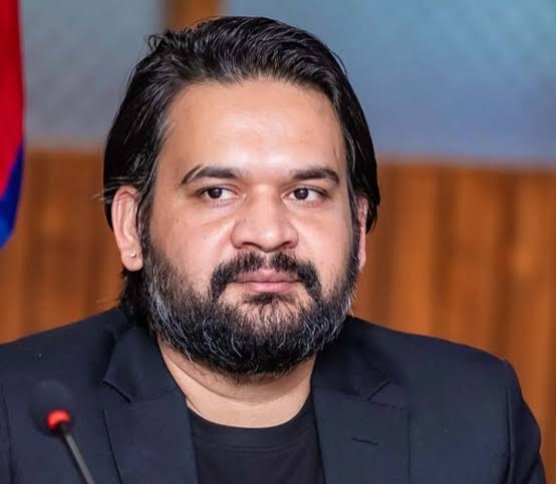
Kathmandu, Nepal March 26: The Rastriya Swatantra Party on Thursday unanimously endorsed senior leader Balendra Shah as its parliamentary party leader, formally clearing the path for his elevation as the next Prime Minister of Nepal.
The Central Committee meeting held at the party headquarters in Kathmandu approved Shah’s name, recognizing the former Kathmandu Mayor, structural engineer and rapper as the party’s choice to lead the government.
Shah will take oath on Friday at the President’s Office, administered by Ram Chandra Paudel, in a ceremony set for the auspicious time of 12:34 PM (local time). According to party leaders, seven conch shells will be blown as part of the ritual, aligned with the belief that numerically significant moments bring success.
As Shah takes the oath of secrecy, 108 Batuks (novice Hindu priests) will chant Swasti Shanti, while 16 Buddhist monks will recite the Ashtamangala, reflecting a blend of Hindu and Buddhist traditions. Shah will later administer the oath to his cabinet members before assuming office at Singha Durbar around 2:15 PM.
Earlier in the day, Shah also took oath as a member of the House of Representatives.
A Meteoric Political Rise
In 2022, Shah—then known for his black rectangular sunglasses and roots in the underground rap scene—shocked the political establishment by winning the mayoral race in Kathmandu as an independent candidate under the symbol of a walking stick. He secured 61,767 votes, defeating Nepali Congress contender Sirjana Singh and Keshav Sthapit.
Over the past four years, Shah has transformed from a local reformist to one of the youngest leaders positioned to head the national government.
His academic credentials include an engineering degree from Himalayan White House College and a Master’s in structural engineering from India. He is currently pursuing a PhD in traditional infrastructure at Kathmandu University.
Political Strategy and Party Entry
Shah’s national prominence surged following the resignation of former Prime Minister KP Sharma Oli after protests that claimed 77 lives. Though widely seen as the preferred interim leader for young activists, he supported former Chief Justice Sushila Karki instead, a move viewed as a long-term strategic bet.
Shah formally joined the RSP on January 18, 2026, launching his campaign from Janakpur. In a bold political gamble, he contested from Jhapa-05—a stronghold of KP Sharma Oli—and defeated the veteran leader by a significant margin, signaling a generational shift in Nepali politics.
Under the internal agreement between RSP President Rabi Lamichhane and Shah, Lamichhane will continue to serve as party chairperson, while Shah assumes the role of parliamentary leader and the party’s official prime ministerial nominee.
Digital Influence and Controversies
Shah’s political messaging is amplified through his massive digital following, including over 3.5 million Facebook followers. His direct, unfiltered communication style often circumvents traditional media.
However, his combative rhetoric has also sparked controversy. A now-deleted post from November openly criticized geopolitical powers—United States, India and China—as well as major Nepali political parties, including his own future party, RSP. Past remarks threatening to “burn down” Singha Durbar further entrenched his image as a volatile yet authentic disruptor to entrenched political norms.
A New Era in Nepali Politics
Born in 1990 as the youngest of four siblings, Shah entered politics shortly after the death of his father, Ayurvedic practitioner Ram Narayan Shah. His blend of technical expertise, populist communication style, and confrontational politics has made him one of the most polarizing and celebrated figures in Nepal today.
As he prepares to take the nation’s highest executive office, observers say the rise of Balendra Shah marks the beginning of a profound political shift—one that challenges decades of traditional party dominance and signals the arrival of a new generation in Nepal’s leadership.
About the Author